Getting Beyond An "Egocentric Ideal": The United States in World Politics
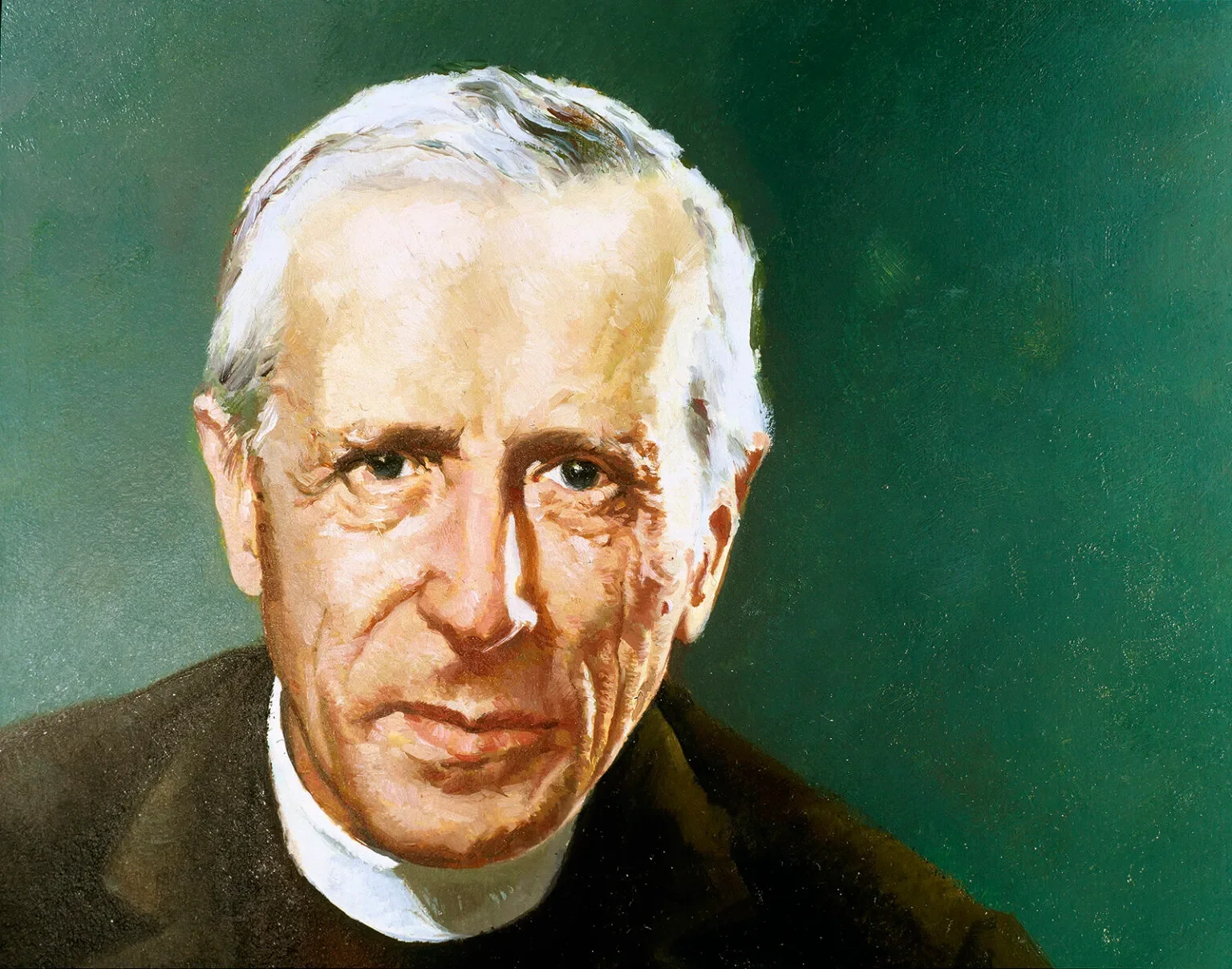
Image of Pierre Teilhard de Chardin (1881-1955), a French philosopher and Jesuit priest (America Magazine)
Special to Princeton Political Review
By Louis René Beres (Ph.D., Princeton, 1971)
Emeritus Professor of International Law
Purdue University
lberes@purdue.edu
"The egocentric ideal of a future reserved for those who have managed to attain egoistically the extremity of `everyone for himself' is false and against nature."
- Pierre Teilhard de Chardin, The Phenomenon of Man
Human “oneness” is an axiomatic truth of life on earth.[1] At the same time, the imperatives of universal cooperation remain subordinate to variously belligerent nationalisms. The United States, especially during the Trump Era, remains committed to “everyone for himself” foreign policies. No such retrograde commitment could conceivably end well, not for America and not for the wider world.
There is more. In world politics, the negative outcomes of “egocentric” thinking are unambiguous. These outcomes suggest endless spasms of war, terrorism and genocide. It follows, inter alia, that without a sweeping rejection of “all against all” philosophies, America and the world could expect only cascading increments of irremediable catastrophe.
There are multiple specifics. This grievous prediction concerns not only tangible matters of weaponry and infrastructure, but also refractory national security doctrines. In essence, the core issues are not complicated. In our increasingly perilous nuclear time, zero-sum orientations to national security are destined to fail. Recalling French Jesuit philosopher Pierre Teilhard de Chardin, this is because such consistently failed orientations are "false and against nature."
History can be instructive. By definition, U.S. President Donald Trump’s "America First" misfires on all cylinders. This conflict-directed orientation, driven at every moment by gratuitous rancor and needless acrimony, portends more than incessant geopolitical losses. It also signifies a doctrine-based incapacity to protect the American nation from unprecedented wars. In a worst-case but increasingly plausible scenario, such wars could become nuclear.[2]
To progress beyond “America First,” America's national security problems should be assessed in comprehensive settings. From the mid-seventeenth century to the present moment—that is, during the continuously corrosive historical period dating back to the Peace of Westphalia in 1648—our adversarial "state system" has produced neither peace nor justice. Even more concerning, there is nothing on any foreseeable horizon that points to gainful national or world-system transformations. In essence, we Americans continue to cling desperately to “unspeakable lies.”[3]
Where does the world political system “stand?” Global anarchy is not about to disappear, or to give way to more rational configurations of cooperative security. This lack of world-system governance can never become a promising context for civilizational advancement and human survival. Though generally unappreciated, Realpolitik[4] or power politics has long proven its self-reinforcing insubstantiality.
As a single state in world politics—and as one of almost 200 unequal or asymmetrical nation-states—the U.S. is not immune from overriding global responsibilities. This sober conclusion about global peace and justice is effectively unassailable and remains as pertinent for the system’s "great powers" as for the most presumptively insignificant members. Regarding immediate U.S. foreign policy obligations, nothing could be more readily apparent or ominously prophetic.[5]
At the beginning of his first term, President Donald Trump's "everyone for himself" view of the world was celebrated by his then-national security advisor, H.R. McMaster. In a Wall Street Journal Op Ed piece dated June 3, 2017, General McMaster declared confidently: "President Trump has a clear-eyed outlook that the world is not a `global community,' but an arena where nations, nongovernmental actors and businesses engage and compete for advantage."
For additional emphasis, the spokesperson added: "Rather than deny this elemental nature of international affairs, we embrace it."[6]
Though it sounded good, this “embrace” made no intellectual, logical or historic sense. Applying narrowly belligerent remedies, the United States has thrust itself into overlapping theatres of conflict without any purposeful “endgame.” Whether in the Middle East or anywhere else, the result of visceral tit-for-tat operations can only be ceaseless military escalations and world system breakdown.
Real history, as we may learn from Swiss psychologist Carl Jung, is the “sum total of individual souls seeking some form of redemption."[7] Recognizable expressions of any broader human search for security can be detected in the decentralizing legal ideals of sovereignty and self-determination. The celebrated "self" in these ideals is never the individual human person. Rather, it refers only to entire peoples, hence to perpetually-conflicting states preparing not for protracted coexistence, but for recurrent war, terrorism and genocide. If meaningful history continues to be ignored, the lamentable result could only produce more measureless displays of mass killing,
For Americans, it's time to think beyond political doggerel and empty political witticisms. Now, world-system context must be genuinely understood and intelligently acknowledged. As relentlessly-primal beings, we humans remain divided into literally countless hostile "tribes," nearly two hundred of which are politely called "states.”
What about “empathy?” Amid self-destroying human populations, this capacity, while not necessarily out of fashion, is traditionally reserved for those within one's own “tribe.” Ominously, this reservation remains true whether the relevant binding loyalties are based on geography, nationality, ideology or religious faith. It follows that any deliberate expansion of empathy to include "outsiders" represents a necessary condition of global progress, and that without such expansion our species will remain dedicated to predation and (ultimately) lamentation. How, then, should we proceed? What ought now to be done to encourage expanding empathy and more caring feelings between "tribes"? Reciprocally, we Americans should further inquire: How can we improve the state of our world to best ensure a more viable fate for the imperiled United States?
For all of us, prima facie, these are difficult intellectual questions, challenging queries that demand conclusive victories of "mind over mind," not just triumphs of "mind over matter."[8]
The essential expansion of empathy for the many could at some point become insufferable, improving human community but only at the expense of private sanity. We humans, after all, were "designed" with very particular boundaries of permissible feeling. Were it otherwise, a more extended range of compassion would bring about total emotional collapse and derivatively collective disintegrations.
Humankind must willingly confront a strange and self-contradictory understanding. This potent awareness would suggest that a widening circle of human compassion represents both an indispensable prerequisite to civilizational survival and an inevitable source of private anguish.
Sometimes, as we may have already observed as individuals, truth can emerge only through paradox. According to Jewish traditions, the world rests upon thirty-six just men – the Lamed-Vov. For them, the overall spectacle of the world is hideously combative and endlessly unendurable. Is there anything useful to be learned from this parable about the state of the American nation and the state of the world?
To begin, there are many conceivable meanings to this ancient Jewish tradition, but one is expressly clarifying “America First” vs. World Civilization. A whole world of just men (and women) is impossible. This is because ordinary individuals cannot bear suffering the boundless torments of others beyond a very narrow circle of identifiable kin. It is for them, the legend continues, that God has created the Lamed-Vov.
What are the pertinent “lessons?” Empathy on a grander scale, though necessary in principle, offers a prescription for individual and generalized despair. How shall humankind reconcile two essential but mutually-destructive obligations? It’s a question that should no longer be ignored.
Now, greater analytic specificity is needed. What should happen next with the state of the American union? What exactly is to be done? How shall forever-intersecting nations deal with a requirement of global civilization that is simultaneously obligatory and unbearable? Finally made aware that empathy for the many is a precondition of collective and individual survival, what can create such needed feeling without spawning intolerable pain?
The answer to such an inherently complex question can never be found amid the “unspeakable lies” of political oratory. Rather, it can be discovered only in a resolute detachment of misdirected individuals from bitterly competitive tribes. Recalling the French philosopher Pierre Teilhard de Chardin, any more perfect union, both national and international, must stem from the calculated replacement of egocentric civilizations with “planetization.” In turn, this redemptive replacement would need to be premised on an inextinguishable global solidarity, a designated embrace of planetary "oneness."
Going forward, individual human beings,[9] not their cumulatively competitive nation-states, should become the focus of national and global reform. Without such a transformational focus, there could be no long term human future of any kind. Above all, this gainful replacement would depend on certain prior affirmations of self, an expanding acceptance of the sacredness of all individuals. If this argument appears patently naïve or “unrealistic,” it still remains vastly more realistic than staying with the “extremity of ‘everyone for himself.’”
Short-sighted American policies such as U.S. President Donald J. Trump’s "America First" disregard not only” the rights of American citizens but also the prerogatives of those who live elsewhere.[10] In more precisely legal terms, this president's neglected human rights obligations are not just a matter of volitional cooperation. They reflect an integral expectation of U.S. domestic law, one that incorporates variously binding norms of international law.
For doubters of "incorporation" who subscribe to contrived bifurcations of U.S. law and international law, they can self-correct by examining Article 6 of the U.S. Constitution. This "Supremacy Clause" mandates adaptations of authoritative treaty law. Such obligatory adaptations are unambiguous.
Overall, Americans should finally understand that the state of their domestic union can never be any better than the state of the wider world.[11] To act pragmatically upon this core understanding, an American president must first wittingly range beyond any traditionally egocentric orientations to world politics. To competent historians, scientists and legal scholars, these orientations are manifestly fallacious. As errors of logical reasoning, they represent portentous examples of the argumentum ad bacculum.
"America First" remains a colossal mistake, one that continuously disadvantages both the United States and the world as a whole. The state of the American union should never be fashioned apart from correlative considerations of planetary survival. To an easily determinable extent, these considerations have been drawn from the law of nations (international law) into U.S. law. In the words of jurist William Blackstone, whose Commentaries on the Law of England[12] reveal literal foundations of U.S. law: “Each state is expected, perpetually, to aid and enforce the law of nations, as part of the common law, by inflicting an adequate punishment upon the offenses against that universal law.”[13]
Human “oneness” remains an axiomatic truth of life on earth. Extrapolating from French philosopher Pierre Teilhard de Chardin’s general principle of human solidarity, any U.S. foreign policy of “America First” must inevitably prove “false and against nature.” It would, therefore, be destined to fail.
[1] The history of western philosophy and jurisprudence includes variously illustrious advocates of global unity, interrelatedness or “oneness.” Notable among them are Voltaire and Goethe. We need only recall Voltaire’s biting satire in the early chapters of Candide and Goethe’s oft-repeated comment linking belligerent nationalism to the declining stages of any civilization. One may also note Samuel Johnson’s expressed conviction that patriotism “is the last refuge of a scoundrel;” William Lloyd Garrison’s observation that “We cannot acknowledge allegiance to any human government…Our country is the world, our countryman is all mankind;” and Thorsten Veblen’s comment that “The patriotic spirit is at cross-purposes with modern life.” Similar sentiments are discoverable in Friedrich Nietzsche’s Human, all too Human. Let scholars also recall Santayana’s coalescing remark in Reason and Society: “A man’s feet must be planted in his country, but his eyes should survey the world.” The unifying point of all such cosmopolitan remarks is that narrow-minded patriotism is not “merely” injurious, it is also de facto “unpatriotic.” Though always proclaimed with robotic fanfare, such alleged patriotism never actually serves the tangible interests of a state’s citizens or subjects.
[2] On irrational nuclear decision-making by this author, see Louis René Beres, The Bulletin of the Atomic Scientists: https://thebulletin.org/2016/08/what-if-you-dont-trust-the-judgment-of-the-president-whose-finger-is-over-the-nuclear-button/ See also, by Professor Beres, https://warroom.armywarcollege.edu/articles/nuclear-decision-making/ (Pentagon). For authoritative early accounts by Professor Beres of nuclear war expected effects, see: Louis René Beres, Apocalypse: Nuclear Catastrophe in World Politics (Chicago: University of Chicago Press, 1980); Louis René Beres, Mimicking Sisyphus: America's Countervailing Nuclear Strategy (Lexington, Mass., Lexington Books, 1983); Louis René Beres, Reason and Realpolitik: U.S. Foreign Policy and World Order (Lexington, Mass., Lexington Books, 1984); and Louis René Beres, Security or Armageddon: Israel's Nuclear Strategy (Lexington, Mass., Lexington Books, 1986). Most recently, by Professor Beres, see: Surviving Amid Chaos: Israel's Nuclear Strategy (New York, Rowman & Littlefield, 2016; 2nd ed. 2018). https://paw.princeton.edu/new-books/surviving-amid-chaos-israel%E2%80%99s-nuclear-strategy
[3] See Rainer Maria Rilke, the Dionysian poet famous for philosophical matters of “being” (in German, “Existenzphilosophie)”: Possibility of Being, 1957.
[4] For an early book by this author on this doomed orientation to world affairs, see: Louis René Beres, Reason and Realpolitik: US Foreign Policy and World Order (1984). See also, by Professor Beres, Terrorism and Global Security: The Nuclear Threat (1987) and America Outside the World: The Collapse of US Foreign Policy (1987).
[5] Never to be overlooked is that international law is a part of US domestic law. In the precise words used by the U.S. Supreme Court in The Paquete Habana, "International law is part of our law, and must be ascertained by the courts of justice of appropriate jurisdiction, as often as questions of right depending upon it are duly presented for their determination. For this purpose, where there is no treaty, and no controlling executive or legislative act or judicial decision, resort must be had to the customs and usages of civilized nations." See The Paquete Habana, 175 U.S. 677, 678-79 (1900). See also: The Lola, 175 U.S. 677 (1900); Tel-Oren v. Libyan Arab Republic, 726 F. 2d 774, 781, 788 (D.C. Cir. 1984) (per curiam) (Edwards, J. concurring) (dismissing the action, but making several references to domestic jurisdiction over extraterritorial offenses), cert. denied, 470 U.S. 1003 (1985) ("concept of extraordinary judicial jurisdiction over acts in violation of significant international standards...embodied in the principle of `universal violations of international law.'").
[6] Although highly unlikely that either McMaster or Trump was aware, the philosophic origins of such "realistic" thinking lie in the classical "Argument of Thrasymachus," offered in Book 1 of Plato's Republic: "Right is the interest of the stronger." In the final analysis, such alleged realism is perpetually self-destructive and overwhelmingly naive.
[7] See C. G. Jung, The Undiscovered Self (1957).
[8] This distinction figured importantly among the ancient Greeks and Macedonians. See, for example, F. E. Adcock's classic text: The Greek and Macedonian Art of War (1957)
[9] See, in this regard, Miguel de Unamuno's discussion of "The Man of Flesh and Bone," in his modern existentialist classic: Tragic Sense of Life (1921).
[10] Interestingly, the founding fathers of the United States - believing firmly in natural law and natural rights - held that the human rights expectations of the Declaration of Independence necessarily apply to all peoples, for all time, and can never be properly reserved solely to Americans. Says Rabbi Avraham Kook, somewhat similarly: “The loftier the soul, the more it feels the unity that there is in us all.”
[11] Says Marcus Aurelius in Meditations: “What does not benefit the entire hive is no benefit to the bee.”
[12] See Book IV.
[13] The related principle of universal jurisdiction is founded upon the presumption of solidarity between states. See generally Hugo Grotius, ON THE LAW OF WAR AND PEACE (Francis W. Kilsey, tr, 1925) and Emmerich de Vattel, LE DROIT DES GENS, OU PRINCIPES DE LA LOI NATURELLE 93 (1916). The case for this principle is also built into the four Geneva Conventions of August 12, 1949, which impose upon the High Contracting Parties the obligation to punish certain grave breaches of their rules, regardless of where the infraction was committed or the nationality of the perpetrators.
LOUIS RENÉ BERES (Ph.D. Princeton 1971) is the author of many books and articles dealing with international relations and international law. His twelfth book is Surviving Amid Chaos: Israel's Nuclear Strategy; 2016; 2nd ed., 2018: https://paw.princeton.edu/new-books/surviving-amid-chaos-israels-nuclear-strategyProfessor Beres publishes in The Bulletin of the Atomic Scientists; Yale Global Online; Oxford University Press; Cambridge University Press; World Politics (Princeton); The Atlantic; The National Interest; US News & World Report; The Hill; Harvard National Security Journal (Harvard Law School); International Journal of Intelligence and Counterintelligence; Parameters (Pentagon); American Journal of International Law; The War Room (Pentagon); Modern War Institute (West Point); The Brown Journal of World Affairs (Brown University); Air Space Operations Review (USAF); Special Warfare (Pentagon); BESA (Israel); JURIST; Modern Diplomacy; Israel Defense; Horasis (Zurich); International Security (Harvard); The New York Times; Princeton Political Review and more than a dozen major national and international law journals. Louis René Beres was born in Zurich at the end of World War II.